

Stone Cladding + Gardens = Joy
How Natural Stone Cladding Can Bring Your Outdoor Garden to Life
Natural stone cladding is one of those upgrades that instantly makes a garden feel intentional, finished, and… expensive (in the best way). It adds texture, structure, and timeless character without screaming for attention.
Here’s how to use it smartly so your outdoor space looks designed—not just decorated.
Why stone cladding works so well outdoors
- Texture & depth: Plants are soft and organic; stone adds a contrasting, tactile backdrop that makes foliage pop.
- Cohesion: Repeating the same stone across planters, walls, and steps ties the whole garden together.
- Durability: Real stone shrugs off sun, rain, salt, and foot traffic. It ages beautifully instead of wearing out.
- Value: A well-detailed stone feature reads “high-end landscaping,” boosting curb appeal and resale.
Ideas on where to use stone cladding
1) Retaining & feature walls
- Use: Create level changes, terrace a slope, or frame a seating nook.
- Tip: Vary stone sizes or add a soldier course/capping for a finished edge.
- Plant pairings:
- Warm sandstone: kangaroo paw, blue fescue, rosemary.
- Cool grey limestone: westringia, white agapanthus, ice-blue succulents.
2) Planter boxes & raised beds
- Use: Define borders, keep soil contained, and elevate hero plants.
- Detail to copy: 20–40 mm stone cladding over concrete block, with a 20 mm stone coping that overhangs by ~15 mm for water drip.
3) Facings for steps, benches & fire pits
- Use: Face concrete steps, built-in benches, or the outer ring of a fire pit for a cohesive, architectural look.
- Pro move: Continue the same stone onto low garden walls nearby to visually “stitch” the space together.
4) Water features
- Use: Stacked stone behind a simple spout turns “trough with a pump” into a moment.
- Finish: Choose split-face or lightly riven textures so water shimmers across the surface.
5) Entry paths & garden portals
- Use: Stone-clad piers with feature lighting create a sense of arrival.
- Lighting: Warm 2700–3000 K uplights at the base + soft path lights to skim the texture.
Choosing the right stone look
- Sandstone (creamy, honey, rust): Sun-washed coastal, relaxed, pairs with native grasses and timber.
- Limestone (cool greys, soft beiges): Contemporary, calm, works with monochrome planting and black steel.
- Granite/Basalt (charcoal): Strong and architectural; makes greens and silvers glow.
- Quartzite/Schist (sparkle, variegation): Textural, great for feature walls where you want movement.
Format matters:
- Random ashlar / irregular: Organic, cottage-to-coastal vibes.
- Linear ledgestone: Clean, modern lines—great for long, low walls.
- Hefty blocks / 3-set formats: Chunky shadow lines, premium feel, faster install than full random.
Design rules that keep it classy (not cluttered)
- Limit to one hero stone and repeat it (walls, planters, steps). Supporting materials—timber, steel, gravel—should complement, not compete.
- Mind your joints: Consistent joint width (or tight-jointed dry-stack look) makes even budget stone read expensive.
- Scale for distance: Larger pieces for long views; finer textures for close-up zones like courtyards.
- Colour discipline: Pick a stone that harmonises with roof, façade, or paving. Then echo that palette in mulch, pots, or furniture accents.
- Light the texture: A couple of low-watt uplights skimming a stone wall at night = magic.
Quick install cheat sheet (so your builder/installer nods)
- Substrate: Masonry or concrete block is king. For framed walls, use an appropriate cement sheet or approved cavity system.
- Adhesive: Exterior-grade polymer-modified tile adhesive or mortar bed per manufacturer. Butter both substrate and stone.
- Control joints: Mirror the structure’s control joints in the cladding every 3–4 m or at changes in direction.
- Capping: Always add a sloped stone cap with drip edge on freestanding walls and planters.
- Drainage: Weep holes or gravel backfill behind retaining/planter walls to prevent hydrostatic pressure.
- Sealing (optional): Use a breathable penetrating sealer if you want to reduce staining. Test first—some stones darken.
Maintenance (it’s light, not zero)
- Seasonal rinse: Hose down dust and pollen.
- Soft brush + pH-neutral cleaner for grime; avoid harsh acids unless stone is acid-safe.
- Re-seal every 3–5 years if you sealed initially, especially near BBQs or high-traffic zones.
Budgeting smart
- Spend on the “moment wall.” Put your best stone where people linger: dining nook, fire pit, entry.
- Save with format: 3-set or linear formats typically install faster than full irregular crazy.
- Avoid tiny leftover areas—continuous runs are cheaper to lay per m² than lots of fussy cutouts.
Common mistakes (and how to dodge them)
- Too many materials: Two stones = no stones. Keep one hero.
- No coping/cap: Tops soak water and weather badly without it.
- Ignoring levels: Stone wants straight, plumb, or purposefully rustic lines—decide and stick to it.
- Harsh spotlighting: Aim for grazing light across the surface, not glare into eyes.
Sample planting palettes that sing with stone
- Warm sandstone: Lomandra, rosemary, dwarf olive, lavender; gravel mulch in warm beige.
- Cool limestone: Westringia ‘Grey Box’, dichondra ‘Silver Falls’, white star jasmine; charcoal pots.
- Charcoal granite/basalt: Flax (Phormium), cycads, strappy agaves; pale decomposed granite paths for contrast.
A simple weekend project plan
- Pick one small wall or raised planter to clad (2–4 m²).
- Choose a single stone format and matching coping.
- Prep substrate, dry-lay a course on the ground, then install from corners inwards.
- Add two low-voltage uplights and one statement plant in front.
- Step back at dusk and enjoy the transformation.
Colonial format emphasizes
symmetry and balance


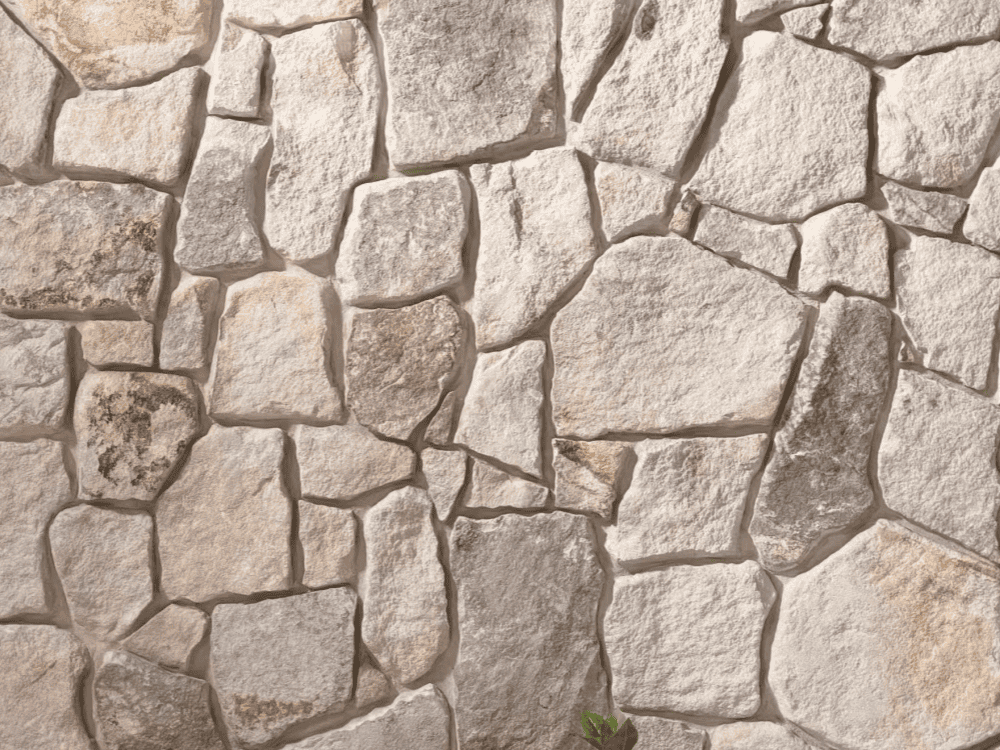
Irregular Walling: Embracing Nature’s Diversity
Natural shapes, colours
and textures. Add character,
warmth and value to
all vertical surfaces.


Sandstone

Sandstone

Limestone

Marble
Linear Walling: A Fusion of Form and Function
Create expression while
maintaining a modern &
timeless aesthetic


